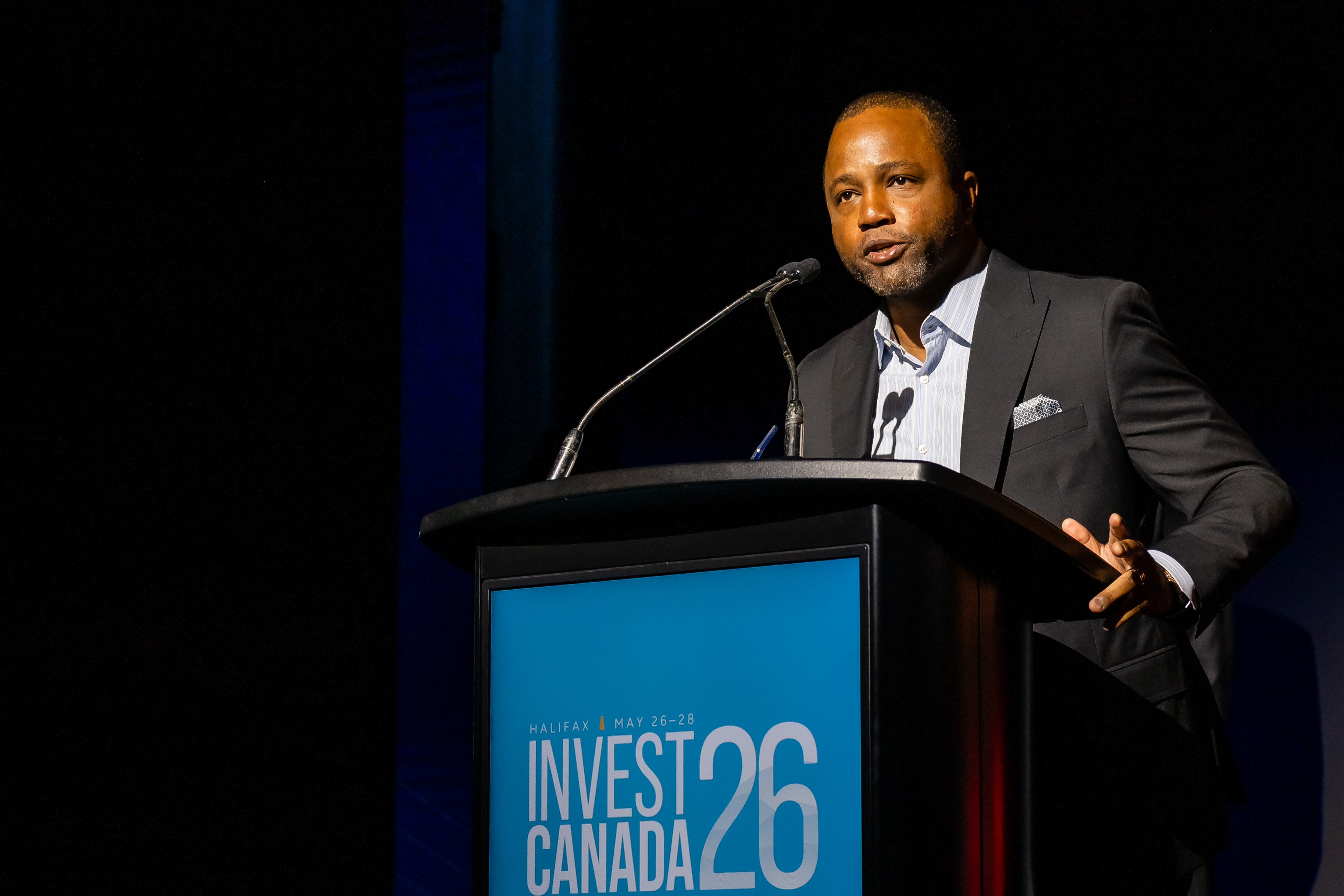
When Isaac Olowolafe Jr.’s family emigrated from Nigeria to Canada in the late 1980s, they found support and friendship within the country’s Nigerian community. In return, his parents made giving back a central part of family life. They volunteered through their local church and hosted newly arrived Nigerian families in their Woodbridge, Ont., home as they established themselves in Canada. Olowolafe’s father, Isaac Sr., a real estate agent, also helped many of those families purchase their first homes.
That example shaped Olowolafe’s own career. “I grew up believing that success carries an obligation to help others succeed as well,” he recalls. After joining his father’s real estate business and launching a brokerage together, he went on to establish his own real estate development company, delivering projects across the Greater Toronto Area. Through that work, he became acutely aware of the barriers many Black Canadians faced in accessing housing and, more broadly, in building better lives and opportunities for their families.
“I looked at what other communities in Canada had that helped them thrive, and I wanted to bring those same advantages to Black communities,” says Olowolafe. “Homeownership was one part of it, but so was entrepreneurship. Underpinning both was something equally important: institutional relationships. Too often, people simply didn’t have access to the networks or awareness of opportunities that open the door to economic mobility. I decided my life’s work would be about helping provide those things.”
Creating Pathways for Black Entrepreneurs
Olowolafe had long supported Toronto Metropolitan University, where he funded the Isaac Olowolafe Jr. Digital Experience Media Lab, a collaborative space that gives students access to emerging technologies such as virtual reality and 3D printing. The university was also home to DMZ, one of Canada’s leading tech incubators. “I started asking myself: what if Black founders could leverage an institution like DMZ, with an existing network that included organizations such as BDC, EDC, the CVCA and many others?” he says. “They could immediately tap into the tech ecosystem and gain exposure to connections that would be almost impossible to build on their own.”
That vision became reality in 2018 with the launch of the Black Innovation Program (BIP), a partnership between Olowolafe and DMZ. The initiative was the first of its kind in Canada, combining founder education and startup incubation to shepherd Black entrepreneurs from the earliest stages of an idea through to building and scaling a business. Just as importantly, BIP recruited successful Black founders and executives as mentors, ensuring participants received guidance from leaders who understood the challenges they faced firsthand.
Abdullah Snobar, Executive Director of DMZ, was immediately impressed by Olowolafe. “Isaac championed Black entrepreneurship well before it became a priority for many organizations,” he says. “Despite encountering reluctance from potential corporate backers during the program’s early fundraising efforts, he remained steadfast in his belief that this work would transform people’s lives. He wasn’t prepared to take no for an answer, and that determination is what made the program successful.”
Olowolafe ultimately secured $1 million in funding for BIP through his private equity firm, Dream Maker Ventures, alongside partners including the Canadian Women’s Foundation, Shopify and BMO. Demand quickly exceeded expectations. What began with a goal of helping 10 founders each year had, by its sixth year, grown to a program supporting thousands of entrepreneurs. Alumni include Goodee, the sustainable home goods marketplace founded by Jamaican-Canadian brothers Byron and Dexter Peart, and Cleanster, a cleaning services platform that has expanded across Canada and into the U.S. after increasing its revenue eightfold through the program.
Recognizing that education mentorship alone could not solve the capital gap facing Black entrepreneurs, Olowolafe launched BKR Capital in 2021, Canada’s first venture capital fund dedicated to Black-led tech businesses. Backed by a $22 million inaugural fund led by BDC, BKR Capital has invested in companies including cybersecurity firm Protexxa, co-founded by Canadian tech leader Claudette McGowan, who was also an early champion of BIP during her time at BMO.
A Lifetime of Community Leadership
Olowolafe’s work through BIP and BKR Capital represents just one part of his efforts to strengthen the Black community. In 2016, he and his wife, Monique, founded the Dream Legacy Foundation, a nonprofit dedicated to helping Black Canadians build generational wealth through education, career development and homeownership. Since its launch, the foundation has supported more than 30,000 people nationwide.
As chair of the Affordable Housing Committee at the BlackNorth Initiative, Olowolafe established a $65 million fund to provide bridge financing for 200 lower-income Black and racialized families purchasing homes. Developed in partnership with the federal government, CMHC and Peel Region, the initiative became Canada’s first homeownership program specifically designed for Black families. Homes are now being delivered to participating families in both Peel and Durham regions. Olowolafe has also invested in improving health outcomes through initiatives such as the Dream Legacy Fellowship in Sickle Cell Disease, a two-year training program developed with SickKids that assists pediatricians in Sub-Saharan Africa treating a disease that disproportionately affects the Black diaspora.
Whether he is expanding access to housing, supporting health research or helping entrepreneurs build businesses, Olowolafe’s focus has remained the same: creating pathways to opportunity. That lifelong commitment has earned him the Ted Anderson Community Leadership Award, sponsored by PIXCELL – Leaders Recruiting Leaders. “Today, BIP has become the benchmark for many of the Black entrepreneurship programs that have since launched across Canada to create opportunities for thousands of people in cities like Edmonton, Halifax and Montreal,” says Snobar. “Isaac is a true trailblazer. He sets an ambitious course, stays committed to it and brings others along every step of the journey.”
Olowolafe believes that the journey is still only beginning. Earlier this year, BKR Capital announced the first $20 million close of its second fund, targeting a final close of $50 million and investments in 25 companies. “What we’ve shown institutions, corporations and investors is that there are incredible Black founders building great companies throughout Canada,” he says. “What was missing was a bridge into the innovation ecosystem and a bridge to capital. Through BIP and BKR Capital, we’ve built those bridges. Now it’s about continuing to strengthen them so even more entrepreneurs can succeed. The sky truly is the limit.”